
Civic engagement is your ticket to actually making a difference... Mostrar más
 SPHE7 visualizaciones·Actualizado Jun 9, 2026·6 páginas
Being Active Citizens: Understanding Rights and Participating in Communities
1 / 6
1
of 6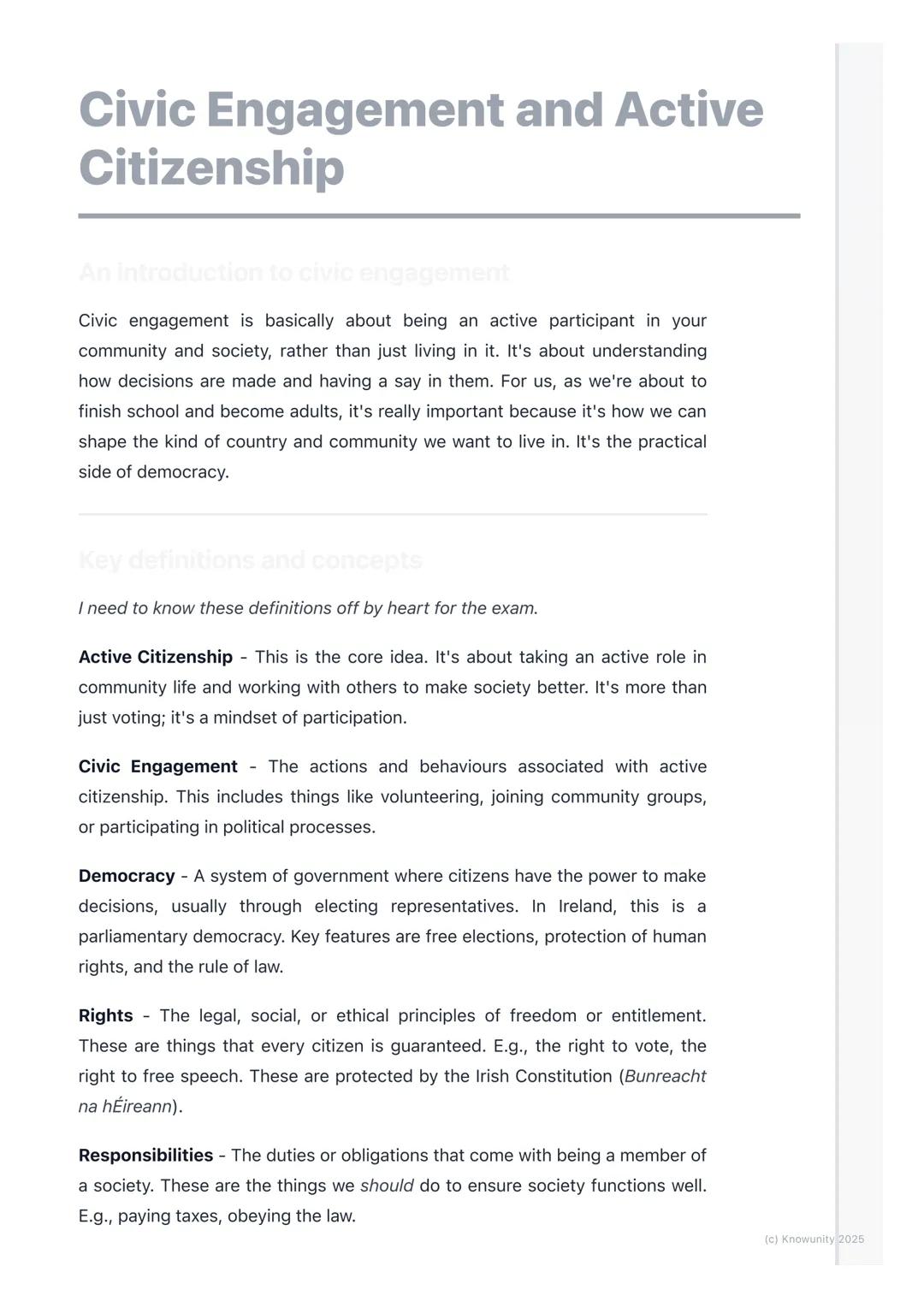
Getting Started: What Active Citizenship Actually Means
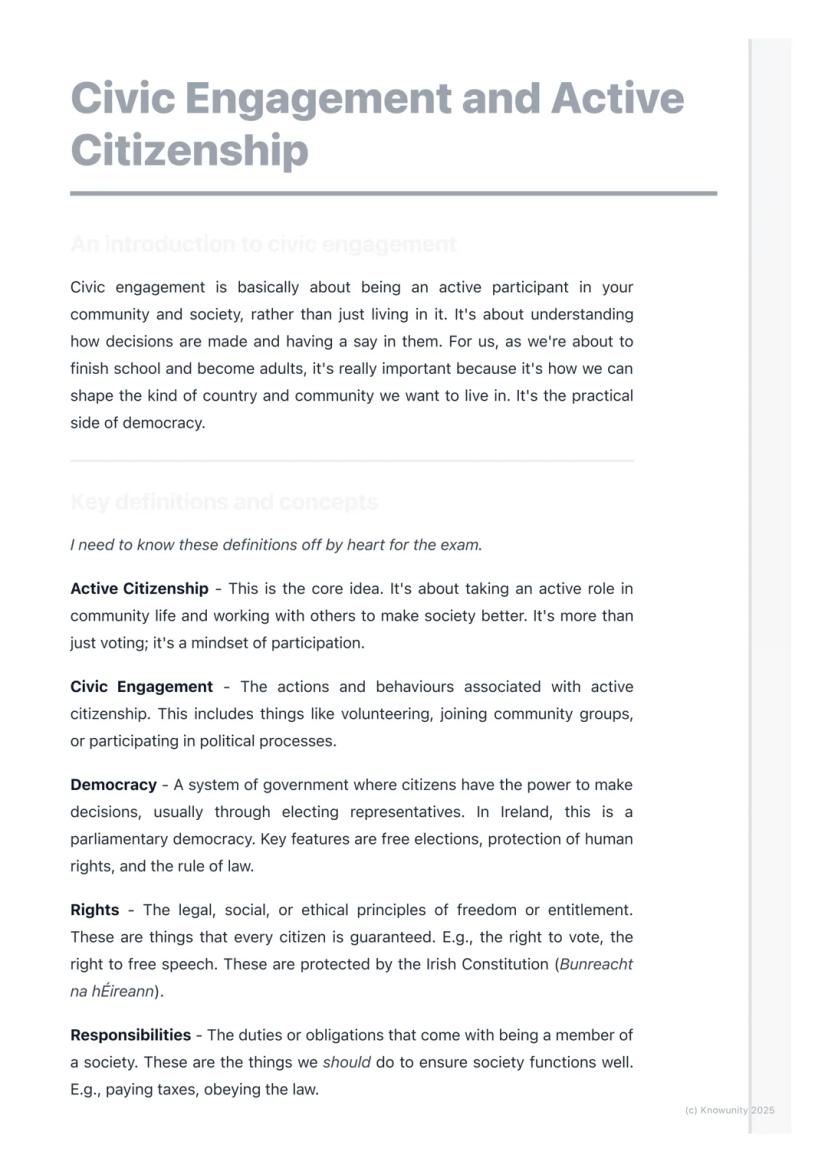
Think of active citizenship as being the main character in your community's story, not just a background extra. It's about taking part in decisions that affect your life and working with others to make things better.
The key difference between being a citizen and being an active citizen is simple: one's just a legal status, the other's a choice to get involved. Active citizenship covers everything from voting and volunteering to speaking up for causes you believe in.
Democracy in Ireland works as a parliamentary system where you get to choose who represents you. But here's the thing – your power doesn't end at the ballot box. Rights like free speech and voting come with responsibilities like staying informed and respecting others' views.
Remember: You don't need to solve world hunger tomorrow. Active citizenship can start with helping a neighbour or joining a local group!
2
of 6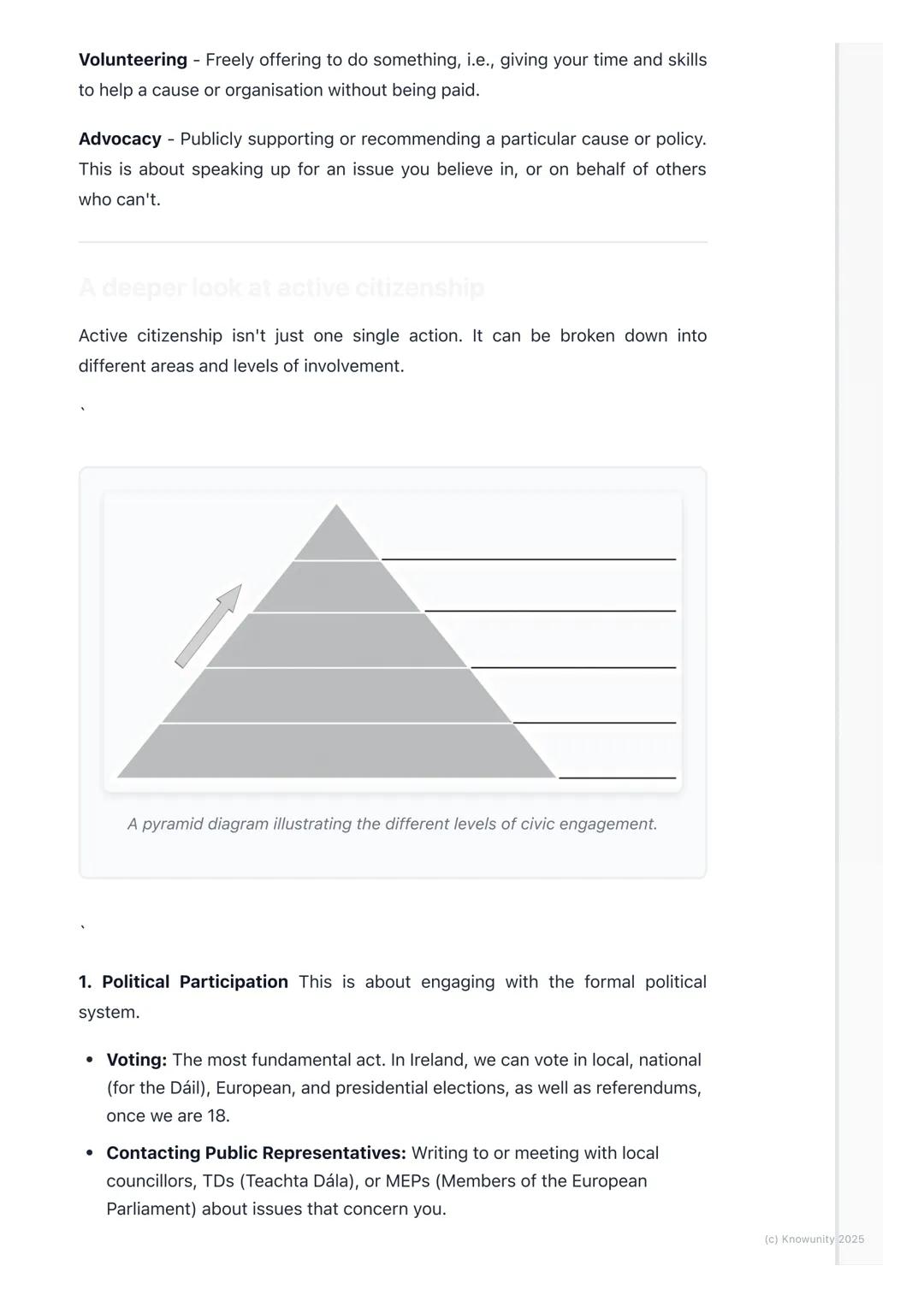
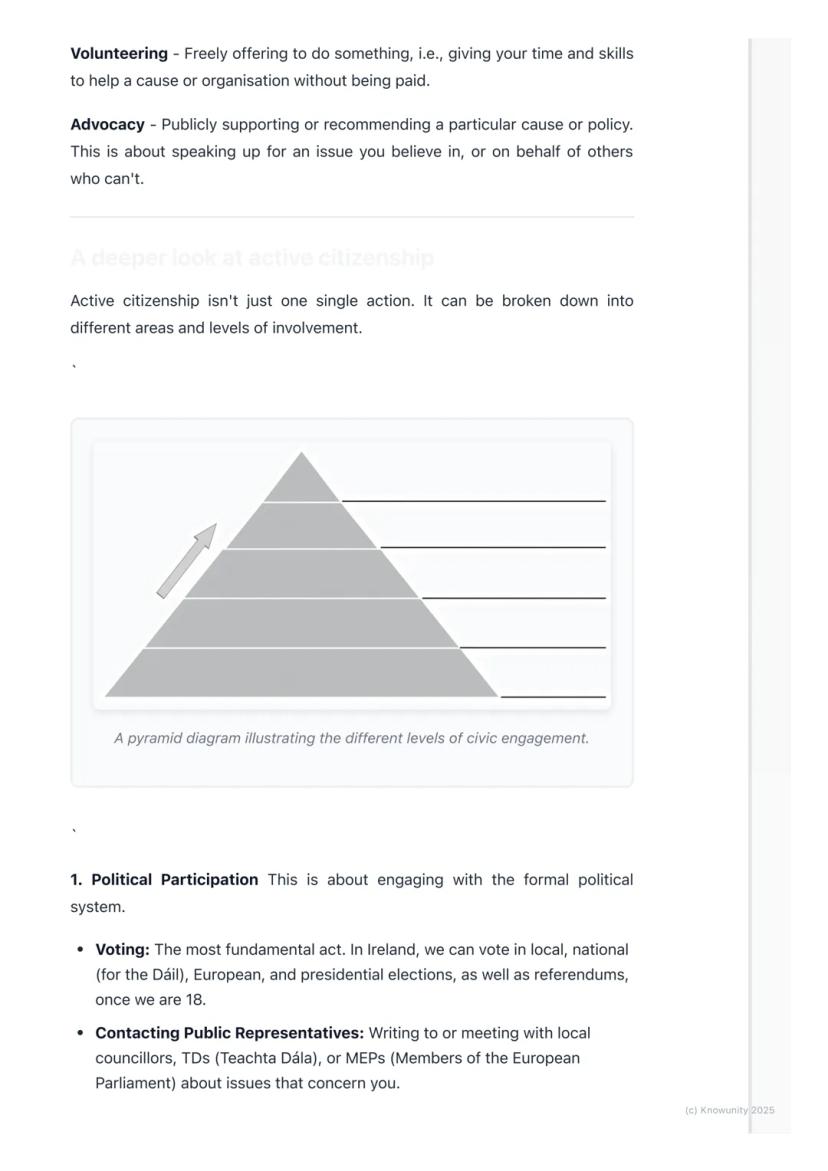
Three Levels of Getting Involved
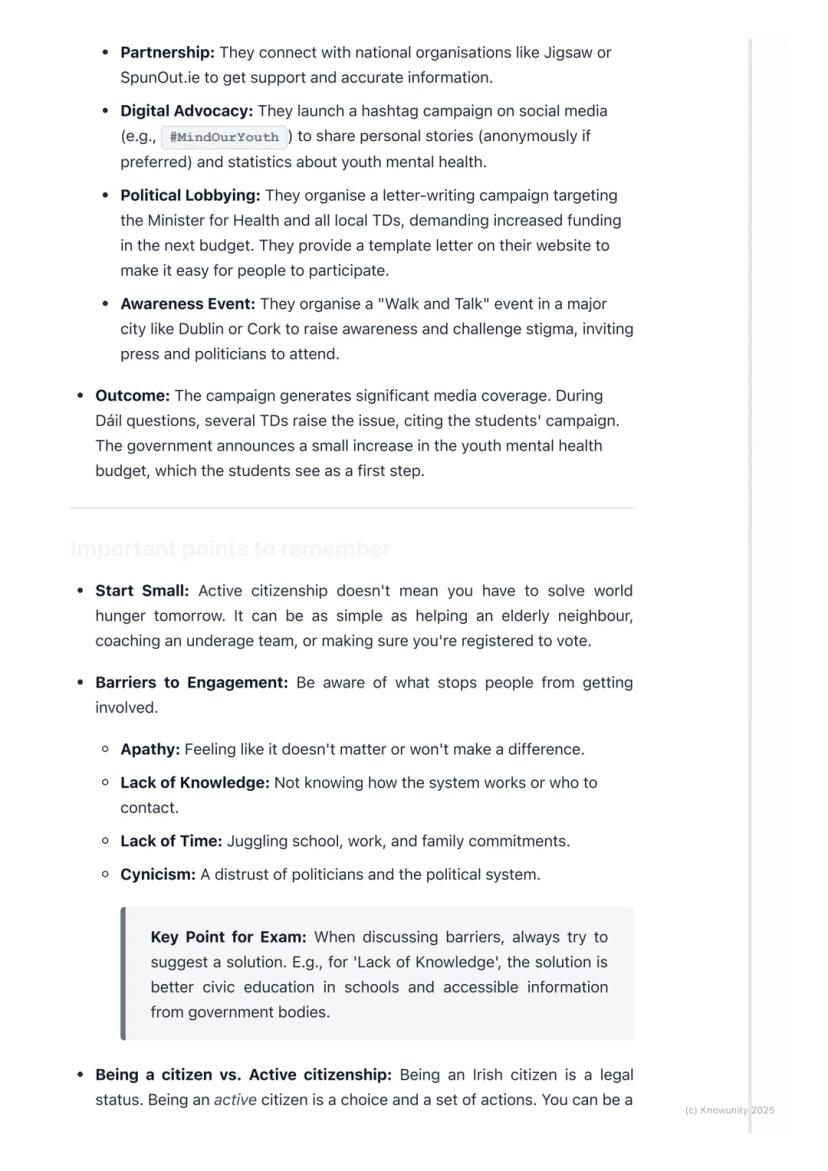
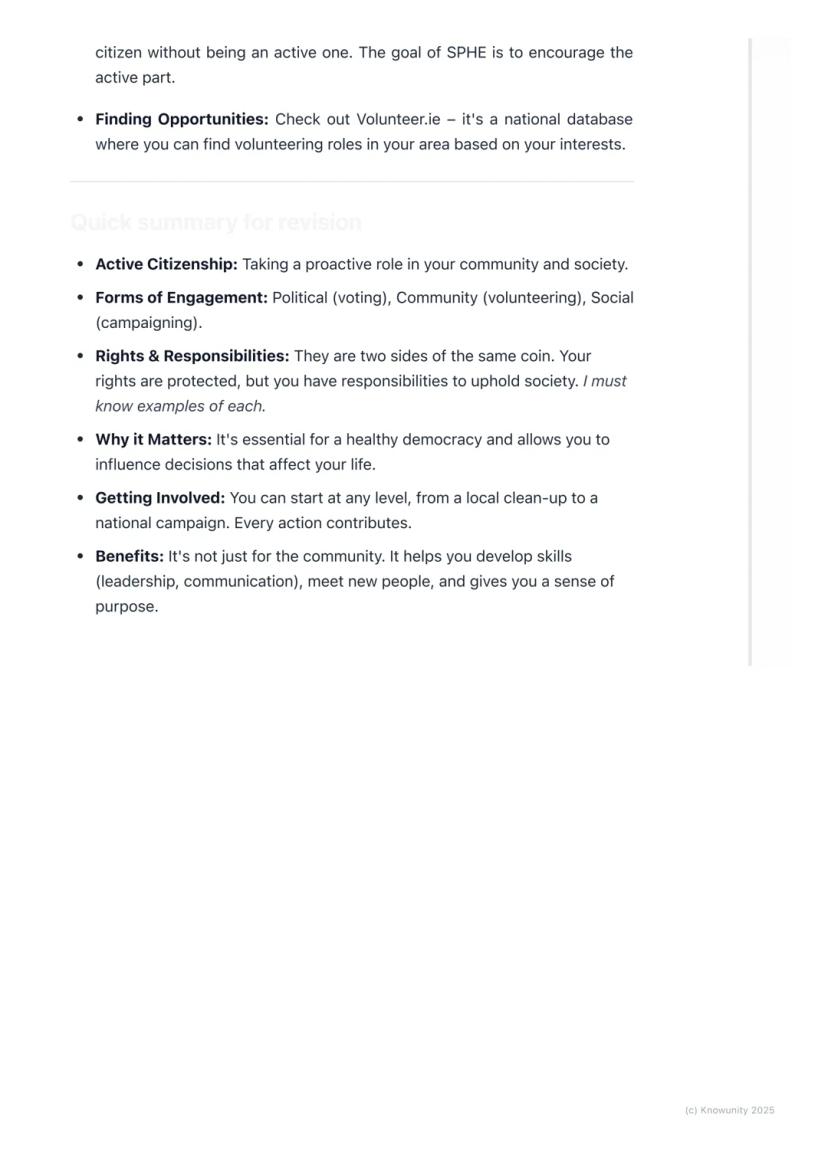
Political participation is your direct line to the formal system. Once you're 18, you can vote in everything from local elections to referendums. But there's more – you can write to your local TD, sign petitions on platforms like Change.org, or even join a political party.
Community involvement happens right where you live. This includes volunteering with groups like the GAA, SVP, or local environmental groups. You might join residents' associations, help with fundraising, or get involved in Tidy Towns initiatives.
Social activism is about pushing for bigger changes in society. This could mean running awareness campaigns on social media, attending peaceful protests, or making ethical choices about what you buy to support your values.
Top Tip: Start with whatever interests you most – whether that's local sports clubs or global climate issues, there's a way to get involved!
3
of 6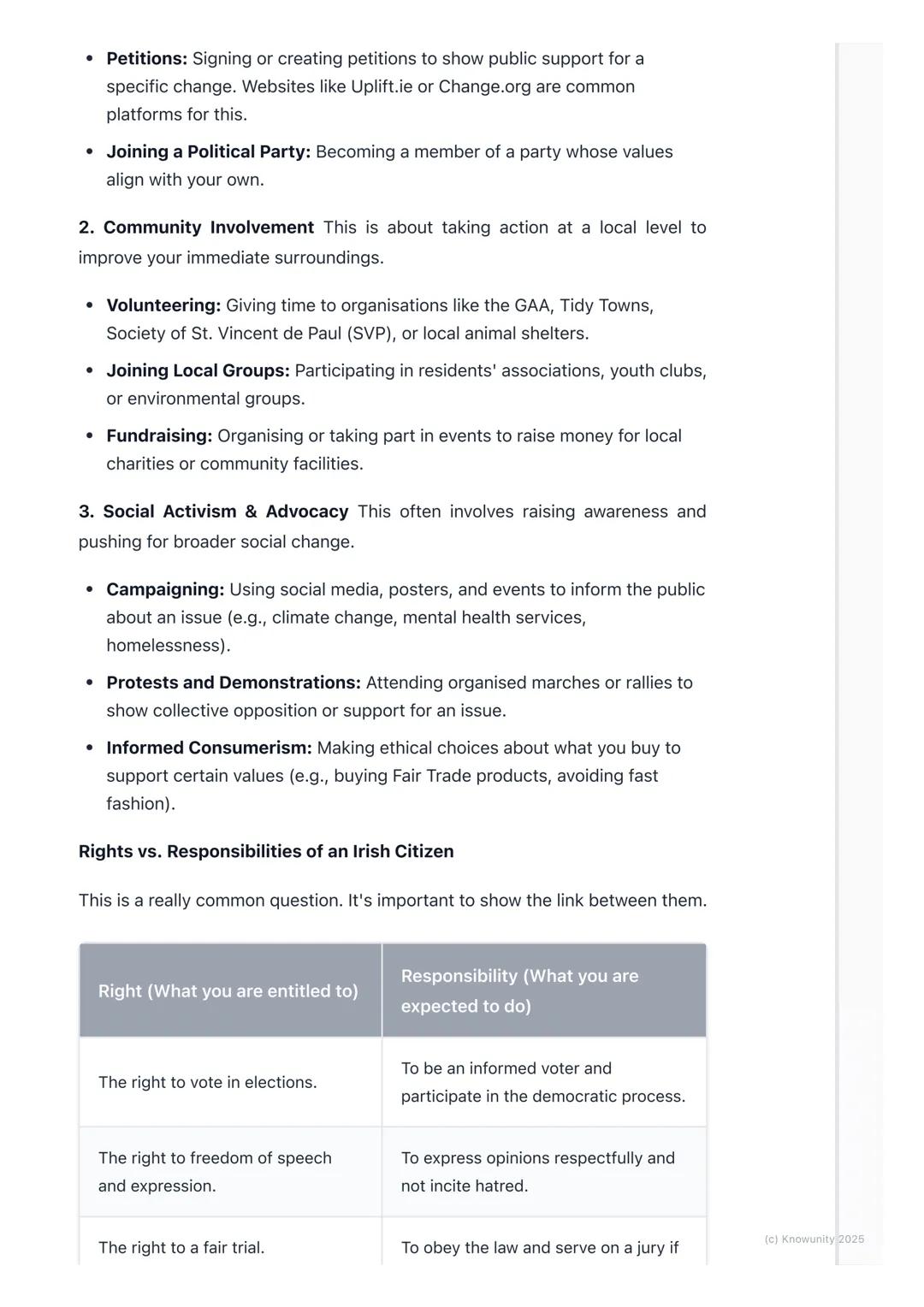
Your Rights and Responsibilities as an Irish Citizen
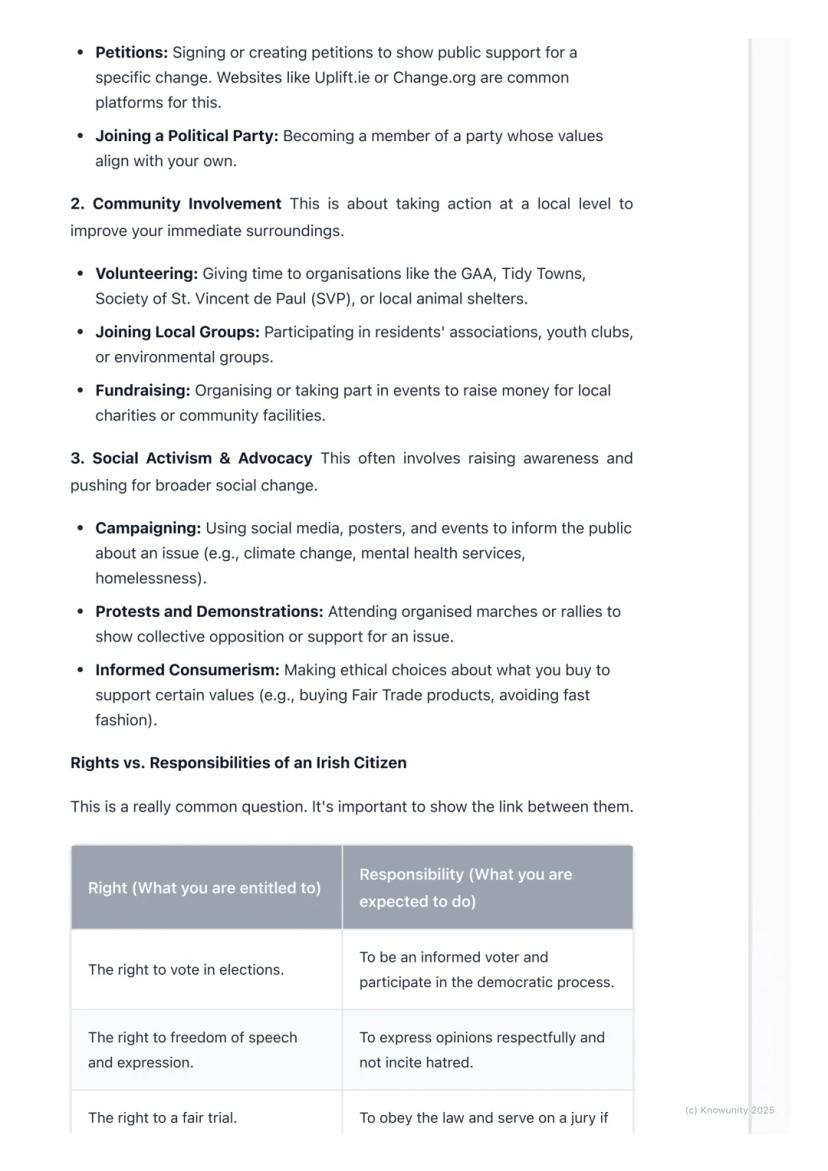
Here's something crucial for your exams: rights and responsibilities are two sides of the same coin. You can't have one without the other in a functioning democracy.
Your rights include voting, free speech, fair trials, education, and equal treatment. But with each right comes a matching responsibility. If you have the right to vote, you should be an informed voter. Free speech means expressing yourself respectfully, not spreading hate.
The Irish Constitution (Bunreacht na hÉireann) protects these rights, but it's up to all of us to uphold our responsibilities. Think of it as a social contract – we all benefit when everyone does their bit.
Advocacy means speaking up for causes you believe in or for people who can't speak for themselves. This is where your rights and responsibilities really come together in practice.
Exam Gold: Always pair a right with its matching responsibility – this shows you understand how democracy actually works!
4
of 6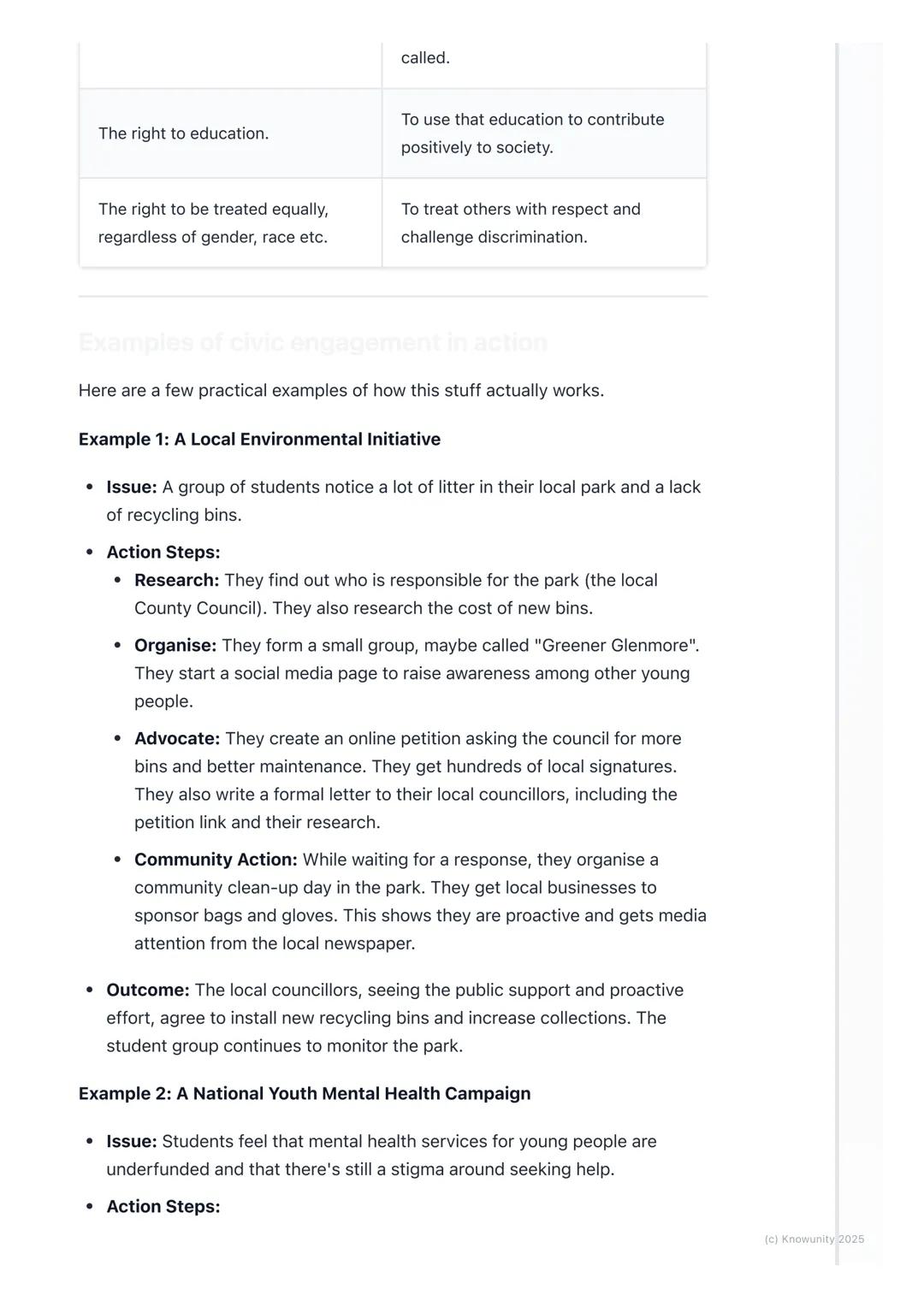
Real-World Examples: Making Change Happen
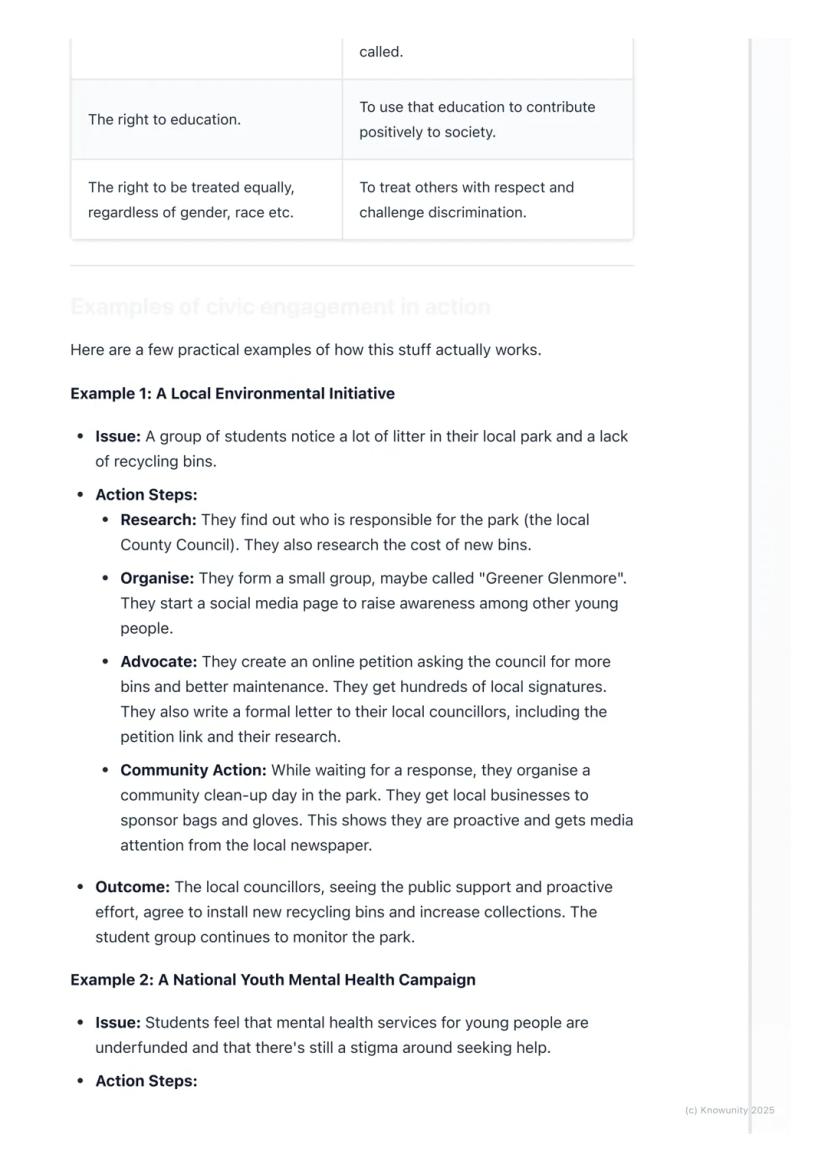
Let's look at how this stuff actually works in practice. Say students notice loads of litter in their local park and no recycling bins. They could form a group, research who's responsible (probably the County Council), and start a petition.
The smart move? Don't just complain – show you're willing to help. They might organise a community clean-up day, get local businesses to sponsor supplies, and contact the local newspaper. When councillors see genuine community support and effort, they're much more likely to listen.
For bigger issues like youth mental health, students might partner with organisations like Jigsaw or SpunOut.ie. They could launch social media campaigns, organise letter-writing drives to TDs, and hold awareness events in major cities.
The key is starting with research, building support, and showing you're serious about solutions, not just problems. Even small wins can lead to bigger changes over time.
Reality Check: Don't expect overnight success, but don't underestimate your power either – politicians really do pay attention to organised campaigns!
5
of 6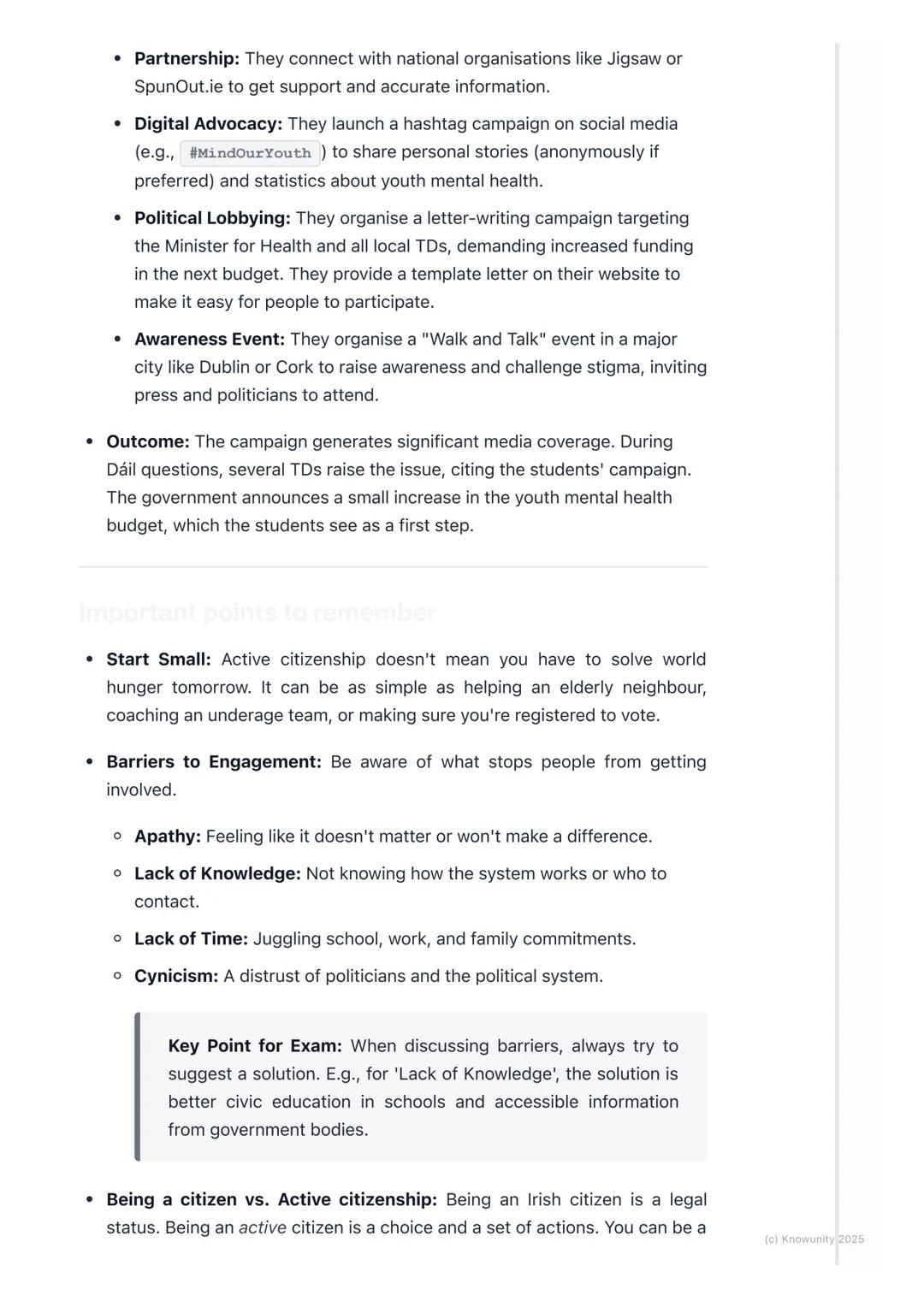
Overcoming Barriers and Getting Started
Loads of people want to get involved but don't know where to start. Common barriers include apathy (thinking it won't make a difference), lack of knowledge about how the system works, being too busy, or just feeling cynical about politics.
Here's the thing – every barrier has a solution. Feeling uninformed? Civic education and accessible government information can help. Too busy? Start small with actions that fit your schedule. Feeling cynical? Connect with local groups where you can see direct results.
Volunteering is often the easiest entry point. Check out Volunteer.ie to find opportunities in your area that match your interests and availability. Whether it's coaching kids' sports, helping at animal shelters, or supporting elderly people, there's something for everyone.
Remember, being an active citizen isn't about being perfect – it's about being engaged. You'll develop leadership and communication skills, meet like-minded people, and get that brilliant feeling of actually making a difference.
Get Started: Pick one issue you care about and spend 10 minutes researching local groups working on it – that's your first step towards active citizenship!
6
of 6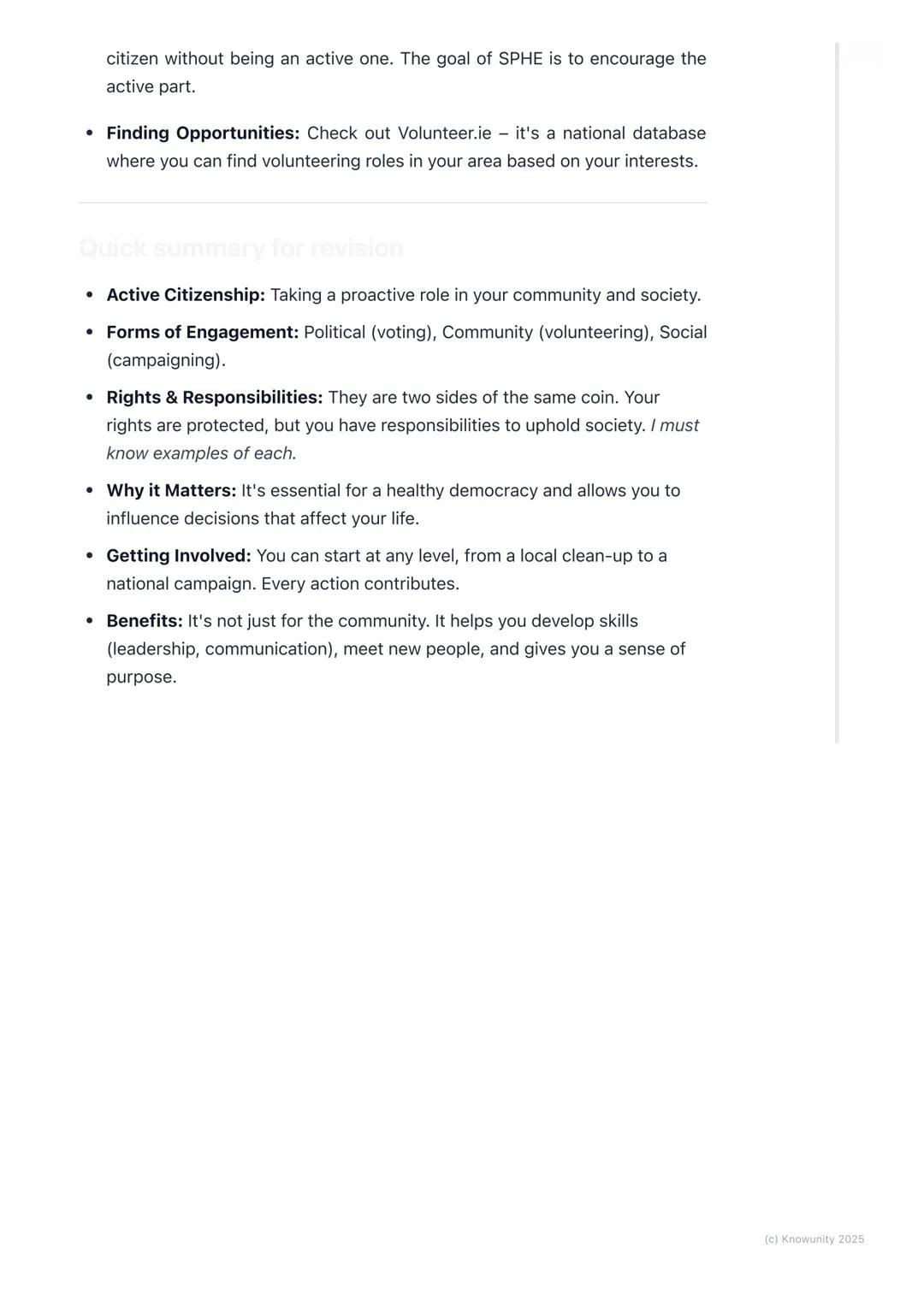
Quick Revision Summary
Active citizenship means choosing to participate actively in your community rather than just existing in it. It's essential for keeping Irish democracy healthy and giving you real influence over decisions that affect your life.
The three main forms are political participation (voting, contacting representatives), community involvement (volunteering, local groups), and social activism (campaigns, ethical consumerism). Each level matters and you can engage at whatever feels right for you.
Your rights and responsibilities work together – you're entitled to things like free speech and fair treatment, but you're expected to use these rights responsibly and respect others' rights too. This balance is what makes democracy function.
The benefits go both ways: you help improve society while developing valuable skills, building networks, and finding purpose. Start wherever you are, with whatever time you have – every action contributes to the bigger picture.
Bottom Line: Active citizenship isn't just good for society – it's good for you too, giving you skills and connections that'll benefit you for life!
Pensamos que nunca lo preguntarías...
¿Qué es Knowunity AI companion?
Nuestro compañero de IA está específicamente adaptado a las necesidades de los estudiantes. Basándonos en los millones de contenidos que tenemos en la plataforma, podemos dar a los estudiantes respuestas realmente significativas y relevantes. Pero no se trata solo de respuestas, el compañero también guía a los estudiantes a través de sus retos de aprendizaje diarios, con planes de aprendizaje personalizados, cuestionarios o contenidos en el chat y una personalización del 100% basada en las habilidades y el desarrollo de los estudiantes.
¿Dónde puedo descargar la app Knowunity?
Puedes descargar la app en Google Play Store y Apple App Store.
¿Knowunity es totalmente gratuito?
¡Sí lo es! Tienes acceso totalmente gratuito a todo el contenido de la app, puedes chatear con otros alumnos y recibir ayuda inmeditamente. Puedes ganar dinero utilizando la aplicación, que te permitirá acceder a determinadas funciones.
Contenidos más populares
9¿No encuentras lo que buscas? Explora otros temas.
Mira lo que dicen nuestros usuarios. Les encantó — y a ti también te encantará.
4.6/5App Store
4.7/5Google Play
La app es muy fácil de usar y está muy bien diseñada. Hasta ahora he encontrado todo lo que estaba buscando y he podido aprender mucho de las presentaciones. Definitivamente utilizaré la aplicación para un examen de clase. Y, por supuesto, también me sirve mucho de inspiración.
Pablousuario de iOS
Esta app es realmente genial. Hay tantos apuntes de clase y ayuda [...]. Tengo problemas con matemáticas, por ejemplo, y la aplicación tiene muchas opciones de ayuda. Gracias a Knowunity, he mejorado en mates. Se la recomiendo a todo el mundo.
Elenausuaria de Android
Vaya, estoy realmente sorprendida. Acabo de probar la app porque la he visto anunciada muchas veces y me he quedado absolutamente alucinada. Esta app es LA AYUDA que quieres para el insti y, sobre todo, ofrece muchísimas cosas, como ejercicios y hojas informativas, que a mí personalmente me han sido MUY útiles.
Anausuaria de iOS
SPHE7 visualizaciones·Actualizado Jun 9, 2026·6 páginasBeing Active Citizens: Understanding Rights and Participating in Communities
Civic engagement is your ticket to actually making a difference in the world around you, rather than just watching from the sidelines. As you're finishing school and stepping into adulthood, understanding how to be an active citizen gives you the... Mostrar más
1
of 6Inscríbete para ver los apuntes. ¡Es gratis!
- Acceso a todos los documentos
- Mejora tus notas
- Únete a millones de estudiantes
Getting Started: What Active Citizenship Actually Means
Think of active citizenship as being the main character in your community's story, not just a background extra. It's about taking part in decisions that affect your life and working with others to make things better.
The key difference between being a citizen and being an active citizen is simple: one's just a legal status, the other's a choice to get involved. Active citizenship covers everything from voting and volunteering to speaking up for causes you believe in.
Democracy in Ireland works as a parliamentary system where you get to choose who represents you. But here's the thing – your power doesn't end at the ballot box. Rights like free speech and voting come with responsibilities like staying informed and respecting others' views.
Remember: You don't need to solve world hunger tomorrow. Active citizenship can start with helping a neighbour or joining a local group!
2
of 6Inscríbete para ver los apuntes. ¡Es gratis!
- Acceso a todos los documentos
- Mejora tus notas
- Únete a millones de estudiantes
Three Levels of Getting Involved
Political participation is your direct line to the formal system. Once you're 18, you can vote in everything from local elections to referendums. But there's more – you can write to your local TD, sign petitions on platforms like Change.org, or even join a political party.
Community involvement happens right where you live. This includes volunteering with groups like the GAA, SVP, or local environmental groups. You might join residents' associations, help with fundraising, or get involved in Tidy Towns initiatives.
Social activism is about pushing for bigger changes in society. This could mean running awareness campaigns on social media, attending peaceful protests, or making ethical choices about what you buy to support your values.
Top Tip: Start with whatever interests you most – whether that's local sports clubs or global climate issues, there's a way to get involved!
3
of 6Inscríbete para ver los apuntes. ¡Es gratis!
- Acceso a todos los documentos
- Mejora tus notas
- Únete a millones de estudiantes
Your Rights and Responsibilities as an Irish Citizen
Here's something crucial for your exams: rights and responsibilities are two sides of the same coin. You can't have one without the other in a functioning democracy.
Your rights include voting, free speech, fair trials, education, and equal treatment. But with each right comes a matching responsibility. If you have the right to vote, you should be an informed voter. Free speech means expressing yourself respectfully, not spreading hate.
The Irish Constitution (Bunreacht na hÉireann) protects these rights, but it's up to all of us to uphold our responsibilities. Think of it as a social contract – we all benefit when everyone does their bit.
Advocacy means speaking up for causes you believe in or for people who can't speak for themselves. This is where your rights and responsibilities really come together in practice.
Exam Gold: Always pair a right with its matching responsibility – this shows you understand how democracy actually works!
4
of 6Inscríbete para ver los apuntes. ¡Es gratis!
- Acceso a todos los documentos
- Mejora tus notas
- Únete a millones de estudiantes
Real-World Examples: Making Change Happen
Let's look at how this stuff actually works in practice. Say students notice loads of litter in their local park and no recycling bins. They could form a group, research who's responsible (probably the County Council), and start a petition.
The smart move? Don't just complain – show you're willing to help. They might organise a community clean-up day, get local businesses to sponsor supplies, and contact the local newspaper. When councillors see genuine community support and effort, they're much more likely to listen.
For bigger issues like youth mental health, students might partner with organisations like Jigsaw or SpunOut.ie. They could launch social media campaigns, organise letter-writing drives to TDs, and hold awareness events in major cities.
The key is starting with research, building support, and showing you're serious about solutions, not just problems. Even small wins can lead to bigger changes over time.
Reality Check: Don't expect overnight success, but don't underestimate your power either – politicians really do pay attention to organised campaigns!
5
of 6Inscríbete para ver los apuntes. ¡Es gratis!
- Acceso a todos los documentos
- Mejora tus notas
- Únete a millones de estudiantes
Overcoming Barriers and Getting Started
Loads of people want to get involved but don't know where to start. Common barriers include apathy (thinking it won't make a difference), lack of knowledge about how the system works, being too busy, or just feeling cynical about politics.
Here's the thing – every barrier has a solution. Feeling uninformed? Civic education and accessible government information can help. Too busy? Start small with actions that fit your schedule. Feeling cynical? Connect with local groups where you can see direct results.
Volunteering is often the easiest entry point. Check out Volunteer.ie to find opportunities in your area that match your interests and availability. Whether it's coaching kids' sports, helping at animal shelters, or supporting elderly people, there's something for everyone.
Remember, being an active citizen isn't about being perfect – it's about being engaged. You'll develop leadership and communication skills, meet like-minded people, and get that brilliant feeling of actually making a difference.
Get Started: Pick one issue you care about and spend 10 minutes researching local groups working on it – that's your first step towards active citizenship!
6
of 6Inscríbete para ver los apuntes. ¡Es gratis!
- Acceso a todos los documentos
- Mejora tus notas
- Únete a millones de estudiantes
Quick Revision Summary
Active citizenship means choosing to participate actively in your community rather than just existing in it. It's essential for keeping Irish democracy healthy and giving you real influence over decisions that affect your life.
The three main forms are political participation (voting, contacting representatives), community involvement (volunteering, local groups), and social activism (campaigns, ethical consumerism). Each level matters and you can engage at whatever feels right for you.
Your rights and responsibilities work together – you're entitled to things like free speech and fair treatment, but you're expected to use these rights responsibly and respect others' rights too. This balance is what makes democracy function.
The benefits go both ways: you help improve society while developing valuable skills, building networks, and finding purpose. Start wherever you are, with whatever time you have – every action contributes to the bigger picture.
Bottom Line: Active citizenship isn't just good for society – it's good for you too, giving you skills and connections that'll benefit you for life!
Pensamos que nunca lo preguntarías...
¿Qué es Knowunity AI companion?
Nuestro compañero de IA está específicamente adaptado a las necesidades de los estudiantes. Basándonos en los millones de contenidos que tenemos en la plataforma, podemos dar a los estudiantes respuestas realmente significativas y relevantes. Pero no se trata solo de respuestas, el compañero también guía a los estudiantes a través de sus retos de aprendizaje diarios, con planes de aprendizaje personalizados, cuestionarios o contenidos en el chat y una personalización del 100% basada en las habilidades y el desarrollo de los estudiantes.
¿Dónde puedo descargar la app Knowunity?
Puedes descargar la app en Google Play Store y Apple App Store.
¿Knowunity es totalmente gratuito?
¡Sí lo es! Tienes acceso totalmente gratuito a todo el contenido de la app, puedes chatear con otros alumnos y recibir ayuda inmeditamente. Puedes ganar dinero utilizando la aplicación, que te permitirá acceder a determinadas funciones.
Contenidos más populares
9¿No encuentras lo que buscas? Explora otros temas.
Mira lo que dicen nuestros usuarios. Les encantó — y a ti también te encantará.
4.6/5App Store
4.7/5Google Play
La app es muy fácil de usar y está muy bien diseñada. Hasta ahora he encontrado todo lo que estaba buscando y he podido aprender mucho de las presentaciones. Definitivamente utilizaré la aplicación para un examen de clase. Y, por supuesto, también me sirve mucho de inspiración.
Pablousuario de iOS
Esta app es realmente genial. Hay tantos apuntes de clase y ayuda [...]. Tengo problemas con matemáticas, por ejemplo, y la aplicación tiene muchas opciones de ayuda. Gracias a Knowunity, he mejorado en mates. Se la recomiendo a todo el mundo.
Elenausuaria de Android
Vaya, estoy realmente sorprendida. Acabo de probar la app porque la he visto anunciada muchas veces y me he quedado absolutamente alucinada. Esta app es LA AYUDA que quieres para el insti y, sobre todo, ofrece muchísimas cosas, como ejercicios y hojas informativas, que a mí personalmente me han sido MUY útiles.
Anausuaria de iOS